The Short Answer
Programmatic SEO indexing works best when you do not submit every generated URL blindly. Prioritize the pages most likely to deserve discovery, check technical quality, submit in batches, and monitor what happens. FreeIndexer fits as the submission workflow layer once your generated pages are crawlable, internally linked, and worth indexing.
Start with the indexing education hub if you need the indexing basics. If you are deciding between a tool and a custom workflow, read FreeIndexer vs indexing API.
When This Matters
You publish pages from a database, template, location set, category set, marketplace inventory, integration directory, comparison system, or content automation workflow. Your issue is not one URL taking time to appear. Your issue is volume.
Programmatic SEO creates a special indexing problem because publishing velocity can exceed discovery velocity. If you publish 5,000 URLs, you need a system that decides which URLs deserve attention first.
Why Programmatic SEO Creates Indexing Bottlenecks
Search engines are selective with large URL sets. If the pages look duplicated, thin, isolated, or low-value, many of them may be crawled slowly or not indexed at all.
Common bottlenecks include:
- too many low-value URL combinations
- weak internal linking
- slow or unstable templates
- duplicate titles and descriptions
- canonical mistakes
- pages published before data is complete
- no clear prioritization between URL tiers
- poor sitemap segmentation
Submission helps only after those basics are under control.
Create URL Tiers First
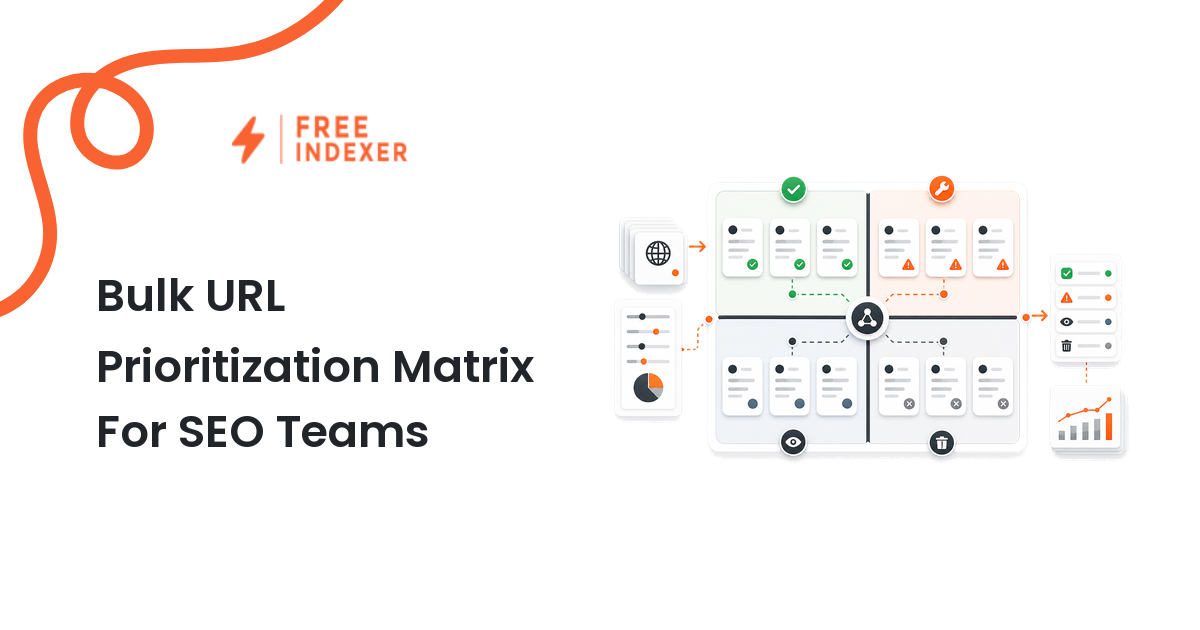
Do not send every generated URL into the same queue. Build tiers.
Tier 1: highest business value
- product or service pages
- city/service combinations with demand
- integration pages
- category pages
- pages connected to revenue or lead generation
Tier 2: support and long-tail pages
- informational pages
- comparison pages
- lower-volume location pages
- supporting content
- refreshed pages with improved data
Tier 3: experimental or low-confidence pages
- newly generated long-tail pages
- pages with sparse data
- pages not yet internally linked well
- pages created for testing
Submit Tier 1 first. Improve and test Tier 2. Be careful with Tier 3.
Run A Pre-Indexing Quality Gate
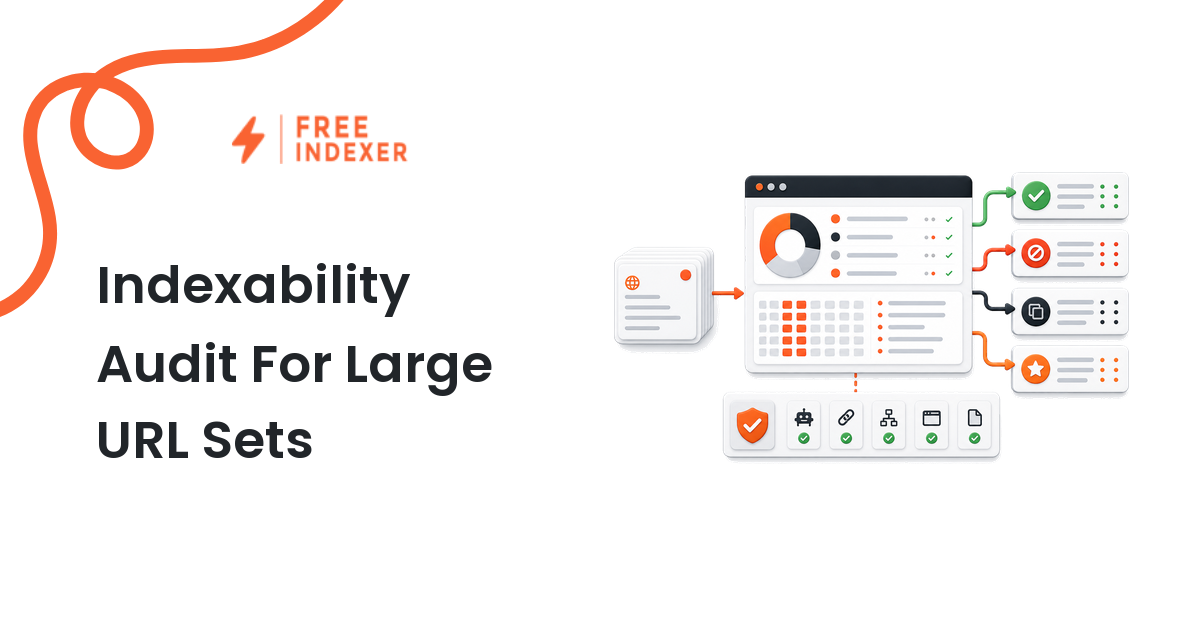
Before submission, run each batch through a quality gate.
Check:
- final URL returns
200 - page is not
noindex - canonical points to itself or intended canonical
- page has unique title and useful content
- page is linked from at least one relevant internal page
- page is included in the right sitemap
- template loads quickly enough
- page is not empty or placeholder-like
This quality gate protects your submission capacity and your site quality.
Batch By Publishing Velocity
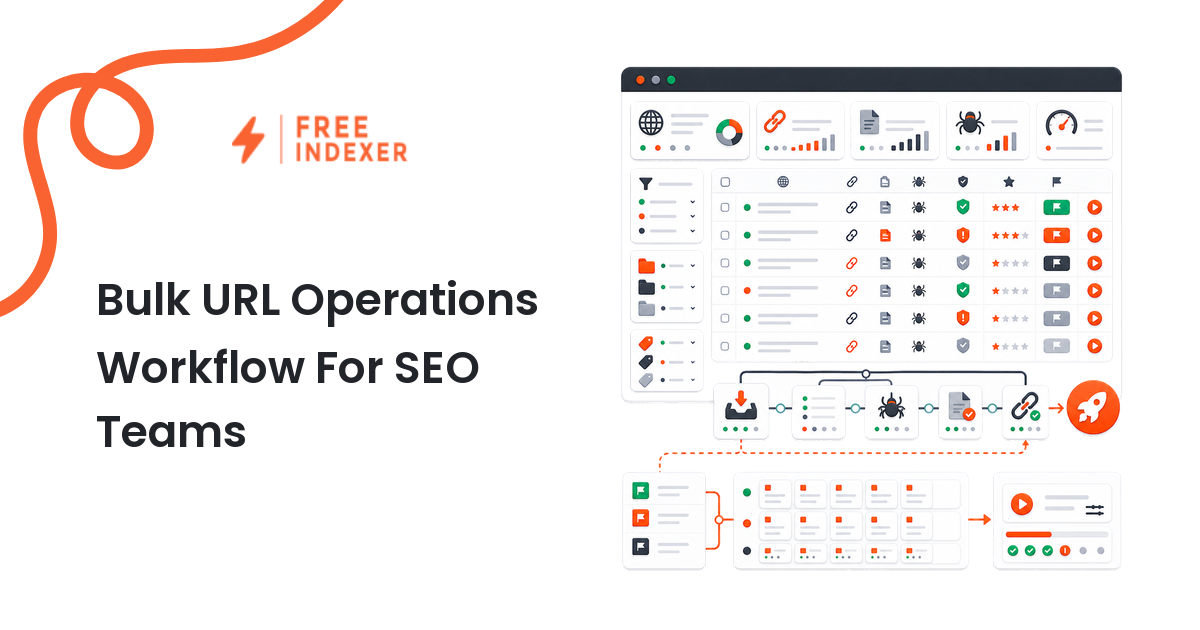
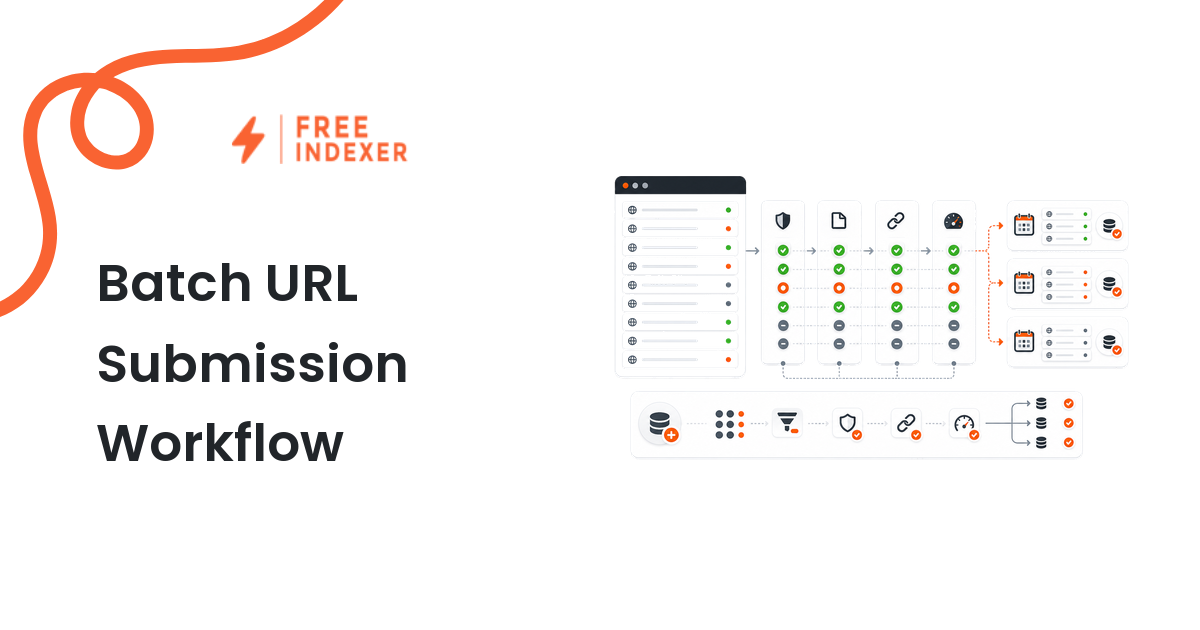
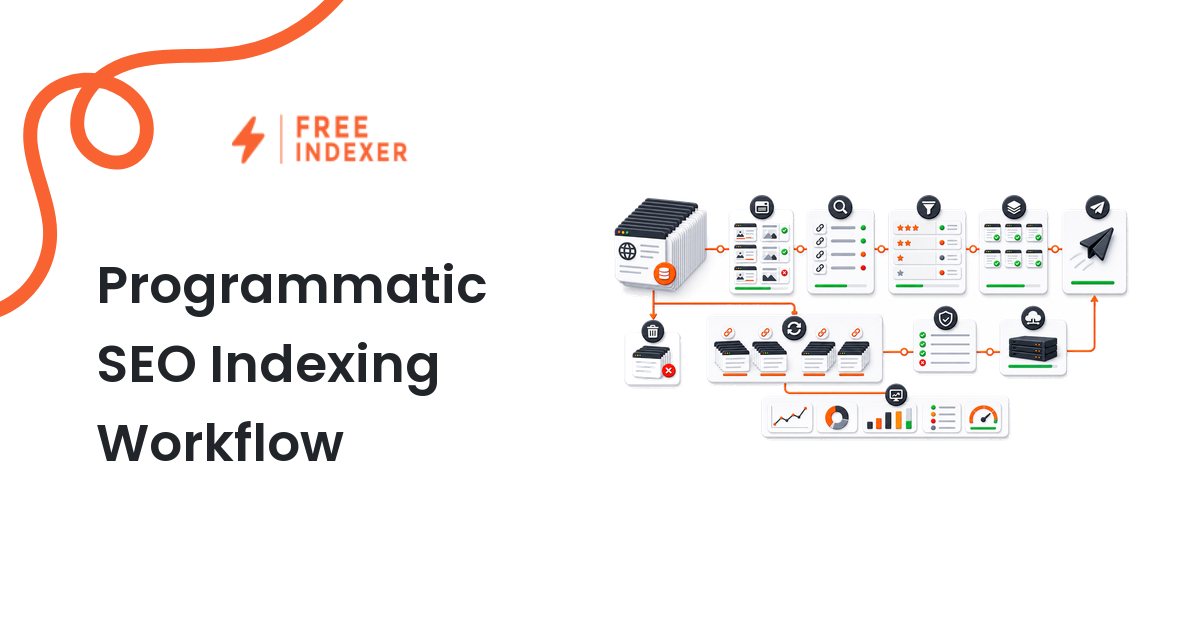
A practical batching workflow:
- Export new URLs from your publishing system.
- Deduplicate and normalize them.
- Assign each URL a tier.
- Remove URLs that fail the quality gate.
- Submit Tier 1 URLs first through FreeIndexer.
- Submit Tier 2 URLs as capacity allows.
- Hold Tier 3 until you improve links or content.
- Track submission and later indexing status.
This workflow gives your team control. Instead of asking "Why are 5,000 pages not indexed?", you can ask "How did Tier 1 perform, and what should we improve before Tier 2?"
How FreeIndexer Fits
FreeIndexer is useful as the URL submission layer for prioritized batches. It is not the publishing system, the quality gate, or the analytics layer. It fits after the page is created and checked.
For programmatic SEO builders, the most important FreeIndexer decision is capacity. Your plan should match your publishing rhythm. If you publish 100 important URLs per week, your workflow needs different capacity than a site publishing 10,000 experimental URLs per month.
If your team is technical and wants custom integration, compare the tradeoffs in FreeIndexer vs indexing API. If you are an agency running programmatic SEO for clients, the agency indexing workflow gives a service workflow angle.
Monitoring After Submission
Track at least:
- submitted URL
- tier
- template type
- publish date
- submission date
- later indexing status
- internal link count or source
- notes about content quality
This helps you learn which templates and URL types search engines accept. The goal is not just more submissions. The goal is better indexing decisions upstream.
Expectations And Limits
Search engines do not owe every generated page a place in the index. Programmatic SEO works when the pages are useful, differentiated, internally connected, and technically clean.
FreeIndexer can support discovery, but it cannot compensate for a weak programmatic page set. Use submission data as feedback. If a tier performs poorly, improve the page template, data depth, internal links, or publishing criteria.
Example Release Gate For 10,000 Pages
A programmatic release needs a stop condition. Imagine a directory project with 10,000 planned city-and-service pages:
| Gate | Required result | Failure action |
|---|---|---|
| Data completeness | Location, service, proof, and contact fields present | Hold incomplete records |
| Unique intent | Page answers a distinct city-and-service need | Consolidate duplicate combinations |
| Technical output | 200 response, self-canonical, indexable HTML | Stop the affected template |
| Discovery path | Linked from a crawlable regional or service hub | Add the page to the architecture |
| Quality sample | Human review passes across edge-case records | Revise the generator |
Publish a representative cohort first—perhaps 200 pages covering different locations, data densities, and template variants. Compare crawl access, canonical selection, indexing patterns, and user behavior before scaling the next cohort.
If one template underperforms, do not compensate by submitting it more aggressively. Inspect the page promise, data quality, internal links, and rendered output. A weak template multiplied by thousands is an engineering and content problem, not a submission-capacity problem.
Use the best Google indexing tools guide alongside this workflow. The useful question is not which tool accepts the largest file; it is which process keeps unqualified URLs out of that file.
FAQ
Should I submit all programmatic pages at once?
Usually no. Prioritize high-value pages first and submit in batches. This helps you learn from results before pushing more URLs.
What is the best indexing strategy for large sites?
Segment URLs by value and quality. Use internal links and sitemaps correctly, then submit prioritized batches.
Can FreeIndexer replace technical SEO for programmatic pages?
No. It supports submission workflows, but technical quality and page value still matter.
When should I use an API workflow instead?
Consider an API-style workflow if indexing submission must be deeply integrated into your publishing system and your team can maintain the integration.
What should I do with pages that never index?
Review quality, duplication, canonical tags, internal links, and search demand. Some pages should be improved; others should not exist.
Next Step
Plan your FreeIndexer daily points around your real publishing velocity and submit the highest-value programmatic URLs first.