The Short Answer
SEO agencies should treat URL indexing as a repeatable operating workflow: check client URLs, prioritize them, submit them, record the work, and report outcomes honestly. FreeIndexer fits as the submission layer for client URLs and backlinks, especially when manual one-by-one indexing work does not scale.
For the foundation, start with the indexing education hub. If you are comparing tools for the agency stack, see the Google indexing tools guide.
When This Matters
You manage multiple client sites. Each client publishes new pages, updates existing pages, earns or builds backlinks, launches campaigns, and asks why the work is not showing up in Google yet. You need a process that is repeatable, affordable, and easy to explain.
The hard part is not submitting one URL. The hard part is building a workflow your team can run every week without forgetting pages, overpromising results, or wasting effort on blocked URLs.
Why Agencies Need An Indexing Workflow
Agencies often create more URLs than they realize. A single client campaign can include service pages, local pages, blog posts, citations, press mentions, profile links, guest posts, internal support content, and refreshed pages.
Without a workflow, indexing becomes reactive. A client asks about a URL, someone checks it manually, someone submits it somewhere, and the action disappears into a private note or chat thread.
A proper workflow gives you:
- a list of submitted URLs
- a submission date
- a reason each URL was submitted
- a later status check
- a realistic client explanation
- a way to prioritize high-value URLs first
Which Client URLs To Prioritize
Not all client URLs deserve the same attention. Prioritize by business value and indexability.
High-priority URLs usually include:
- new money pages
- location or service pages
- campaign landing pages
- refreshed pages with meaningful updates
- client backlinks from important placements
- citations and profiles that support local SEO
- content assets connected to active campaigns
Lower-priority URLs include thin archive pages, duplicate tag pages, filtered URLs, or pages the client does not actually want visitors to find.
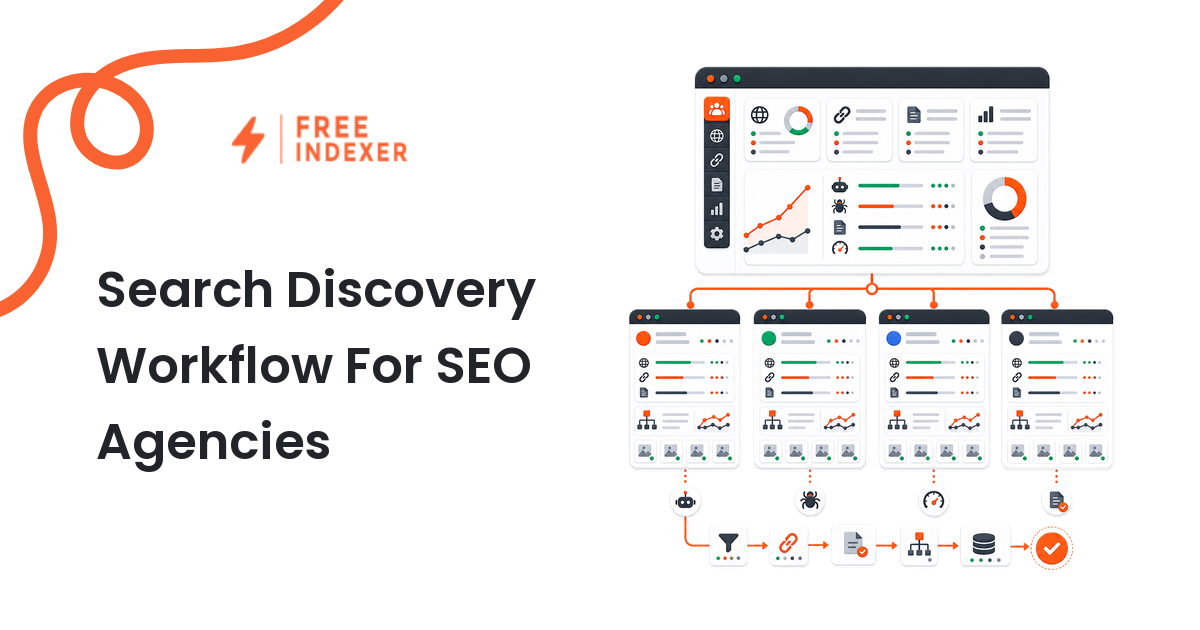
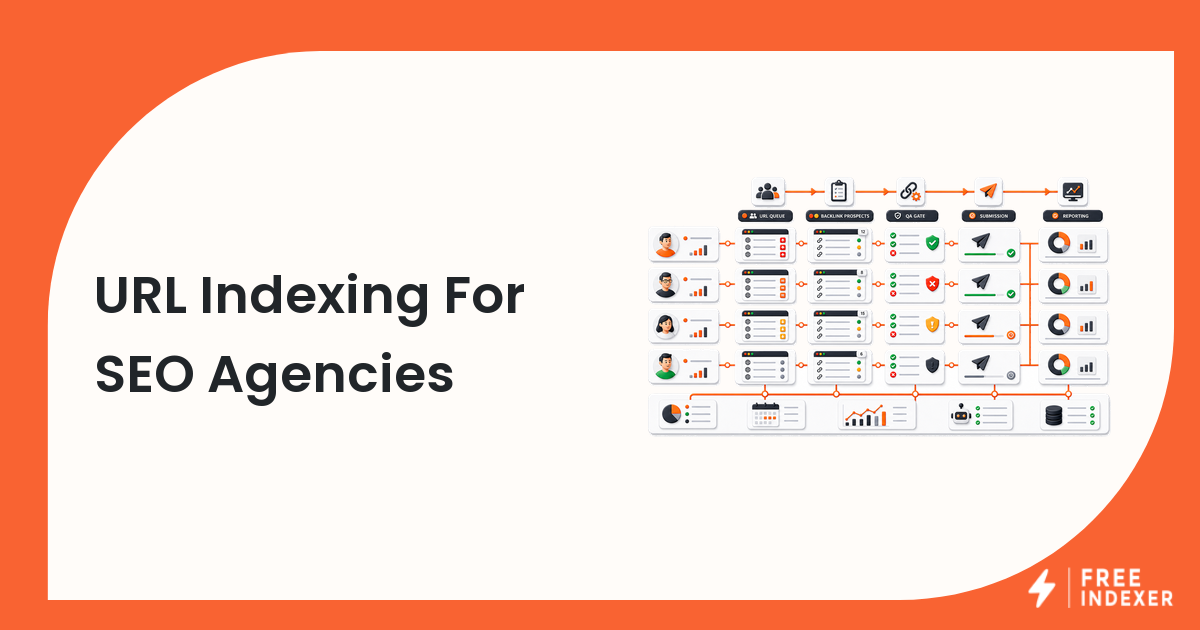
The Agency Indexing Workflow
Use a weekly or campaign-based workflow.
- Collect new and updated URLs from the client worklog.
- Separate owned pages from backlink URLs.
- Check each URL for crawlability and indexability.
- Remove blocked, redirected, duplicated, or low-value URLs.
- Group URLs by client and priority.
- Submit batches through FreeIndexer.
- Record the submission date and category.
- Recheck status later.
- Report actions and observations, not promises.
This workflow works for small retainers and larger campaigns. The only difference is volume.
How FreeIndexer Fits
FreeIndexer gives the agency a practical submission layer. Instead of asking each team member to handle indexing manually, the agency can centralize submission work into a repeatable queue.
For small clients, the free or lower-volume path may be enough. For active SEO retainers, daily points matter because the agency is not submitting one URL once. It is submitting new work across multiple clients over time.
If your agency has a technical team and is comparing build-vs-buy options, read FreeIndexer vs indexing API. If you publish or manage very large URL sets, the programmatic SEO indexing workflow may be more relevant.
Reporting To Clients
Be careful with language. Do not tell clients that submission equals indexing or ranking. A better report says:
- URLs reviewed
- blockers found and fixed
- URLs submitted
- submission dates
- later indexing status checks
- recommended next actions
This is more professional and more defensible. It also helps clients understand that search engines make the final indexing decision.
Plan And Capacity Thinking
Agencies should choose plan capacity based on operating volume:
- number of clients
- new URLs per client per month
- backlink URLs submitted
- campaign frequency
- background indexing needs
- whether the desktop app is part of the workflow
Do not choose a plan based only on the biggest possible list. Start with realistic weekly volume, then adjust.
When The Desktop App Helps Agencies
The desktop app can make sense when the agency regularly works with local URL lists or backlink files. It may be useful for operators who prefer desktop software for repeated submissions.
The online app is simpler for general team use. The desktop app is better for list-heavy workflows run by a specific operator.
Agency Queue Example
Consider an agency managing three retainers in one week:
| Client | Incoming URLs | Readiness result | Submission decision |
|---|---|---|---|
| Local services site | 18 location and service pages | 14 ready, 4 missing internal links | Submit 14; return 4 to content |
| SaaS company | 12 launch and documentation pages | 9 ready, 2 wrong canonicals, 1 noindex | Submit 9; send 3 to engineering |
| Affiliate publisher | 45 backlink source URLs | 31 verified, 8 broken, 6 low value | Submit and monitor the verified 31 |
This separation prevents a common reporting mistake: treating the original delivery list as the completed indexing list. Preserve rejected and blocked records, but move them out of the active batch until an owner resolves the problem.
Add four operational fields to every queue: client, URL type, evidence source, and next review date. Those fields make handoffs easier when one specialist performs QA, another submits the batch, and an account manager prepares the report.
The weekly review should answer three questions:
- Which ready URLs have not been submitted?
- Which blocked URLs now have a completed fix?
- Which submitted URLs need evidence-based follow-up rather than another automatic submission?
That operating rhythm scales better than asking each account team to invent its own process.
FAQ
Can agencies promise clients that submitted URLs will be indexed?
No. Agencies should report submission work and indexing checks, but search engines decide what gets indexed.
Should every client URL be submitted?
No. Submit priority URLs that are live, crawlable, and useful. Do not waste capacity on blocked or low-value URLs.
How often should agencies run indexing workflows?
Weekly is a practical cadence for many retainers. Campaign-heavy clients may need submission after each publishing or backlink batch.
Is FreeIndexer better than manual Search Console submission?
For repeated client work, FreeIndexer is more scalable as a workflow. Search Console remains useful for diagnostics and owned-site inspection.
What should be tracked?
Track URL, client, URL type, submission date, later status, and notes about blockers or improvements.
Next Step
Compare FreeIndexer plans based on your real client URL volume, then build a repeatable agency indexing workflow around that capacity.