Understand the quality, spam, reporting, and operational risks of using low-value link tiers solely to force discovery.
For seo operators, the practical goal is simple: Invest in verifiable placements, source-site discovery, and honest monitoring instead of artificial link layers.
Related FreeIndexer reading:
- Backlink Discovery And Indexing Guide
- Backlink Quality Before Indexing
- Link Building Provider Checklist
The Operating Rule
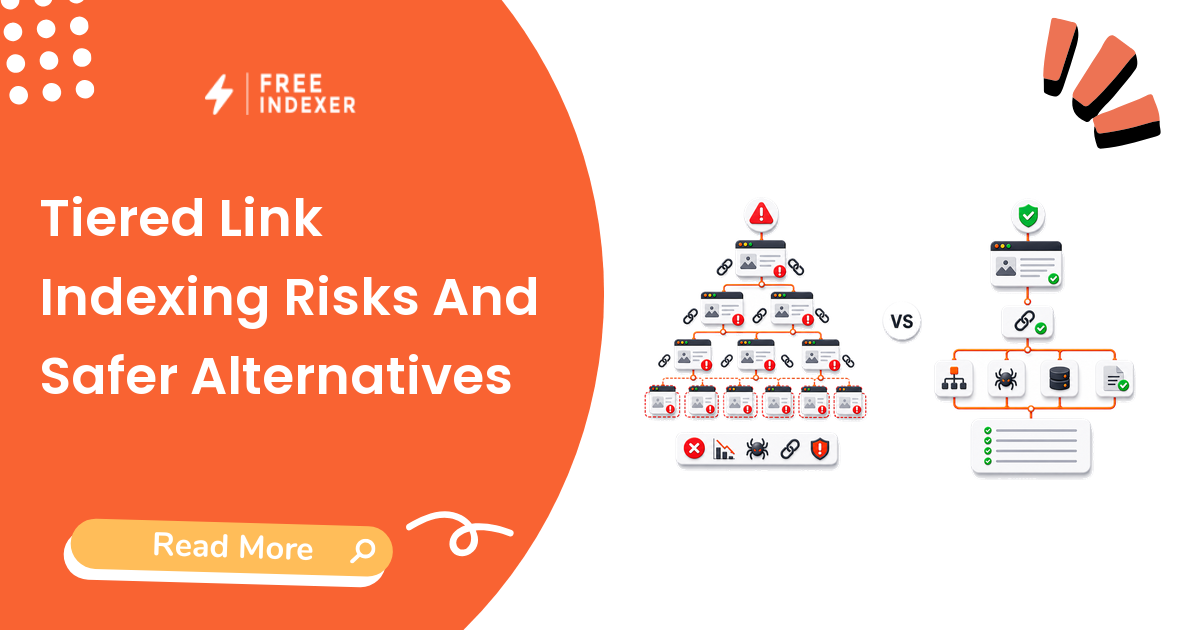
Building extra low-quality links merely to push crawlers toward another backlink can create more URLs to verify, more spam risk, and weaker reporting. A safer workflow improves the original source page's accessibility and prioritizes placements worth keeping.
Technical Signals To Review
- Each added tier creates another dependency that can disappear, redirect, or become spammy.
- Automated tiers often prioritize volume over relevance, editorial value, and stable access.
- Discovery is not the same as ranking value, and neither is guaranteed.
- Client reporting becomes misleading when delivery, discovery, indexation, and business outcomes are blended.
Implementation And Audit Table
| Step | Control | Evidence | Implementation Decision |
|---|---|---|---|
| 1 | Audit the primary placement | Live, relevant, public source page | Fix or replace weak first-tier links before adding complexity. |
| 2 | Check source integration | Internal links, archives, feeds, and categories | Improve legitimate discovery on the source site. |
| 3 | Review provider methods | Automation, ownership, and removal risk | Reject undisclosed spam-heavy processes. |
| 4 | Define reporting | Placement, discovery, and outcome fields | Keep milestones separate. |
| 5 | Choose alternatives | Content links, outreach, source updates, monitoring | Use durable methods that benefit users. |
Apply the rule consistently at template or system level. A clean implementation should make the intended page state obvious to users, crawlers, sitemaps, internal links, and reporting tools.
Practical Scenario
An agency receives a proposal to create 500 automated links to 20 guest posts. Instead, it audits the guest posts, fixes three broken target URLs, asks publishers to add category links, and monitors the verified placements.
Failure Modes To Avoid
- Treating more URLs as automatically better.
- Using tiered links without provider transparency.
- Ignoring cleanup and removal responsibilities.
- Reporting discovered URLs as proven ranking gains.
Where FreeIndexer Fits
FreeIndexer should process only verified source URLs that pass quality checks. It is not a tool for manufacturing link value or masking risky campaigns.
Implementation Notes For Each Step
1. Audit the primary placement
Capture live, relevant, public source page before making a conclusion. Fix or replace weak first-tier links before adding complexity.
Keep the evidence tied to the exact canonical URL and the date of the check. If the issue affects a shared template or URL pattern, record the pattern as well so the team fixes the system instead of repeating the same manual task.
2. Check source integration
Capture internal links, archives, feeds, and categories before making a conclusion. Improve legitimate discovery on the source site.
Keep the evidence tied to the exact canonical URL and the date of the check. If the issue affects a shared template or URL pattern, record the pattern as well so the team fixes the system instead of repeating the same manual task.
3. Review provider methods
Capture automation, ownership, and removal risk before making a conclusion. Reject undisclosed spam-heavy processes.
Keep the evidence tied to the exact canonical URL and the date of the check. If the issue affects a shared template or URL pattern, record the pattern as well so the team fixes the system instead of repeating the same manual task.
4. Define reporting
Capture placement, discovery, and outcome fields before making a conclusion. Keep milestones separate.
Keep the evidence tied to the exact canonical URL and the date of the check. If the issue affects a shared template or URL pattern, record the pattern as well so the team fixes the system instead of repeating the same manual task.
5. Choose alternatives
Capture content links, outreach, source updates, monitoring before making a conclusion. Use durable methods that benefit users.
Keep the evidence tied to the exact canonical URL and the date of the check. If the issue affects a shared template or URL pattern, record the pattern as well so the team fixes the system instead of repeating the same manual task.
Turn The Findings Into An Action Queue
A diagnostic result is useful only when it changes what the team does next. Move each URL into one of four clear queues:
- Ready: the URL is useful, canonical, public, technically accessible, and ready for submission or normal monitoring.
- Fix: the URL has a correctable technical, content, linking, rendering, or reporting problem with an assigned owner.
- Exclude: the URL is intentionally redirected, noindexed, removed, duplicate, private, or otherwise outside the indexing target set.
- Escalate: the issue affects infrastructure, templates, migrations, security controls, or a large URL cohort and needs engineering or product input.
For this topic, the release rule is: Invest in verifiable placements, source-site discovery, and honest monitoring instead of artificial link layers. Do not leave a URL in a vague pending state. Give it an owner, one next action, and a review date based on the evidence available.
Evidence Log To Keep
| Field | What To Record | Why It Matters |
|---|---|---|
| Canonical URL | The final normalized URL checked by the operator | Prevents variants and redirects from splitting the investigation. |
| Cohort | Page type, template, campaign, locale, or backlink group | Reveals whether the issue is isolated or systemic. |
| Evidence source | Live response, URL Inspection, crawl, log, sitemap, or provider record | Makes the conclusion reproducible. |
| Change made | The exact technical, content, link, or workflow update | Separates action from assumption. |
| Owner and review date | Who is responsible and when the URL will be checked again | Stops the queue from becoming passive reporting. |
Keep submission dates in their own field. A submitted URL has completed an operational step; it has not automatically completed crawling, indexation, ranking, traffic, or conversion milestones. That separation makes the report more accurate and makes failed outcomes easier to diagnose.
Final Action Checklist
- [ ] Audit the primary placement: Fix or replace weak first-tier links before adding complexity.
- [ ] Check source integration: Improve legitimate discovery on the source site.
- [ ] Review provider methods: Reject undisclosed spam-heavy processes.
- [ ] Define reporting: Keep milestones separate.
- [ ] Choose alternatives: Use durable methods that benefit users.
- [ ] Confirm the final URL and evidence date in the tracking sheet.
- [ ] Remove excluded or unresolved URLs from the active submission batch.
- [ ] Schedule one follow-up review instead of repeating untracked checks.
Primary Sources
FAQ
Are all tiered links spam?
Not every multi-layer link relationship is manipulative, but automated low-value tiers created solely for search influence carry clear quality and policy risks.
What is a safer discovery approach?
Improve the original source page's internal discovery, verify the placement, and monitor it transparently.
Can FreeIndexer make weak links valuable?
No. Submission does not improve relevance, editorial quality, or policy compliance.
Next Step
Invest in verifiable placements, source-site discovery, and honest monitoring instead of artificial link layers.
Keep the final report honest: document what was fixed, what was submitted, what evidence changed, and what still requires time or a separate SEO decision.