Backlink vendors can help agencies scale execution, but vendor delivery is only one part of the workflow. If the agency does not verify placements and track discovery follow-up, client reporting becomes vague fast.
For the broader indexing model, start with the indexing education hub. This guide is for SEO agencies and blog or network owners who manage external backlink work but still need visibility into what happened after delivery.
The Short Answer
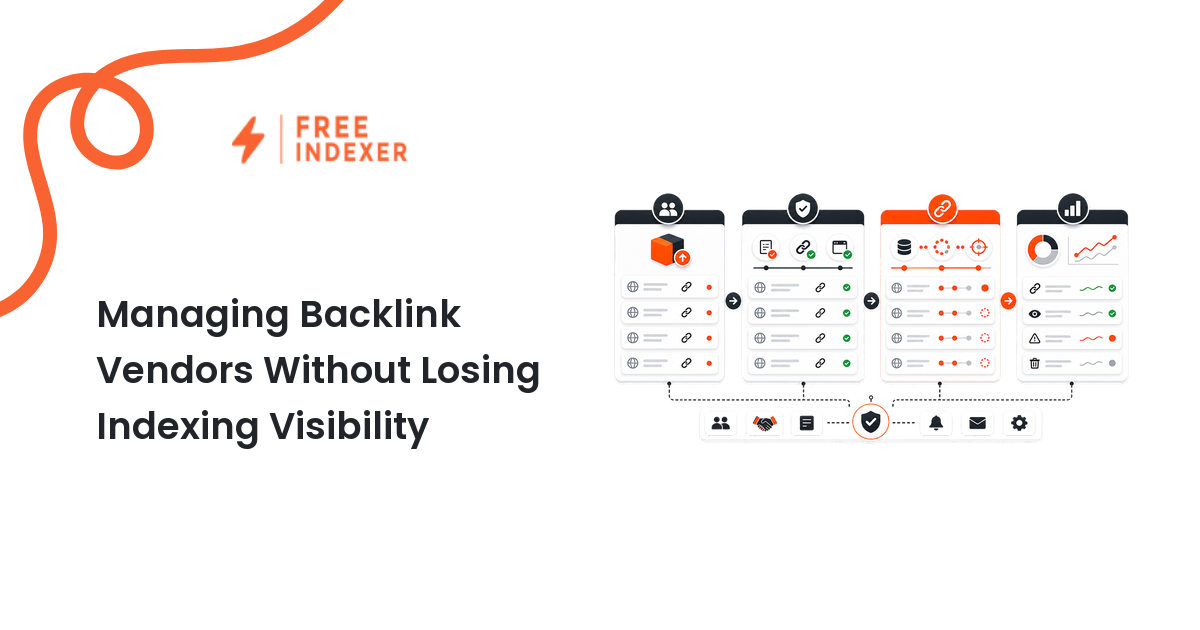
Separate the workflow into four layers: vendor delivery, backlink QA, indexing follow-up, and client reporting. Each layer should have its own fields, owner, and language.
The vendor can deliver placements. The agency should verify them. An indexing workflow can prioritize qualified backlink URLs for discovery follow-up. The client report should separate all three instead of implying certain indexing or ranking outcomes.
Vendor Delivery Is Not Backlink QA
| Layer | Owner | Output |
|---|---|---|
| Vendor delivery | Provider or outreach partner | Delivery sheet, placement URLs, anchors, target URLs |
| Backlink QA | Agency operator | Verified live links, rejected links, correction requests |
| Indexing follow-up | SEO operations | Priority backlink URLs submitted or tracked |
| Client reporting | Account or SEO lead | Clear summary of delivery, QA, actions, and observed status |
Some teams use outside SEO providers for parts of their work. A resource such as SEOeStore can sit in the provider layer for managed SEO or link-building tasks, while FreeIndexer remains separate as the indexing and discovery follow-up layer for verified URLs.
Backlink Vendor QA Checklist
Before any delivered URL enters the follow-up queue, check:
- The linking URL is public and returns a healthy status.
- The page is not a draft, preview, or private URL.
- The link is visible in the rendered page.
- The target URL is correct and final.
- The anchor matches the agreed range.
- The page topic is relevant enough to keep in the campaign record.
- The linking page is not obviously duplicated or empty.
- The placement belongs to the right client and campaign.
- Corrections are requested before the reporting cutoff.
Use the backlink discovery and indexing guide for the broader discovery process and track backlink discovery for SEO campaigns for campaign tracking.
Workflow Example
An agency receives 60 delivered backlink URLs from two vendors. The operations lead does not submit all 60. Instead:
- Import the delivery sheets into one campaign tracker.
- Deduplicate by linking URL and target URL.
- Open a sample from each vendor to catch formatting or delivery problems.
- Verify every Tier 1 placement manually.
- Mark broken, private, wrong-target, or missing-link URLs as rejected.
- Add verified priority URLs to the indexing follow-up queue.
- Report delivery, verified links, rejected links, and follow-up actions separately.
This creates a defensible workflow. If a client asks what happened, the agency can show what was delivered, what passed QA, and what was submitted or tracked for discovery.
Where FreeIndexer Fits
FreeIndexer fits after QA. Use it for verified backlink URLs that deserve organized submission, batching, and follow-up. For a large agency, this is useful because backlink operations are repetitive: client A, vendor B, campaign C, target page D, priority E.
Do not use FreeIndexer to hide vendor quality issues. If a placement is wrong, private, or irrelevant, send it back through QA.
For client language, read backlink indexing for client reporting. For agency process design, connect this with the search discovery workflow for SEO agencies.
Reporting Language That Stays Honest
Use language like:
- "Vendor delivered 60 placement URLs."
- "We verified 47 public backlinks."
- "Eight URLs were returned for correction."
- "Twenty priority backlink URLs were added to discovery follow-up."
- "Indexing and ranking outcomes depend on search engine decisions."
Avoid language like:
- "All delivered links are indexed."
- "This vendor guarantees rankings."
- "Submission guarantees Google will count the links."
Common Mistakes
- Treating vendor delivery as verified work.
- Waiting until client reporting day to open the placement URLs.
- Submitting rejected or private URLs.
- Mixing multiple vendors in one sheet without campaign ownership.
- Using indexing status as a shortcut for link quality.
What To Do Next
| Vendor result | Agency action |
|---|---|
| Live, visible, relevant link | Add to verified list and discovery follow-up if priority |
| Wrong target URL | Request correction |
| Link missing | Mark incomplete and return to vendor |
| Private or preview URL | Reject until public |
| Low-value but valid placement | Record, but do not prioritize |
Part Of This Series
This article is part of the Backlink Discovery And Indexing Guide series.
Recommended path:
- Previous: Link-Building Provider Checklist
- Current: Managing Backlink Vendors Without Losing Indexing Visibility
- Next: Track Backlink Discovery For SEO Campaigns
Series hub: Backlink Discovery And Indexing Guide
Related guides from other workflows:
FAQ
Should agencies submit all vendor-delivered backlink URLs?
No. Verify and prioritize them first. Only live, visible, relevant, and useful placements should enter the discovery follow-up queue.
Is a backlink vendor responsible for indexing?
A vendor may deliver SEO or link-building work, but indexing depends on search engine crawling, indexing systems, and page quality signals. Keep provider delivery and indexing follow-up separate.
Can FreeIndexer help with vendor workflows?
Yes. FreeIndexer can help process verified backlink URLs after QA, especially for batches, tracking, and recurring client operations.
What should client reporting separate?
Separate vendor delivery, agency verification, follow-up actions, and observed outcomes.
Next Step
Separate vendor delivery, backlink QA, indexing follow-up, and client reporting. The cleaner the handoff, the easier it is to scale backlink operations without losing visibility.