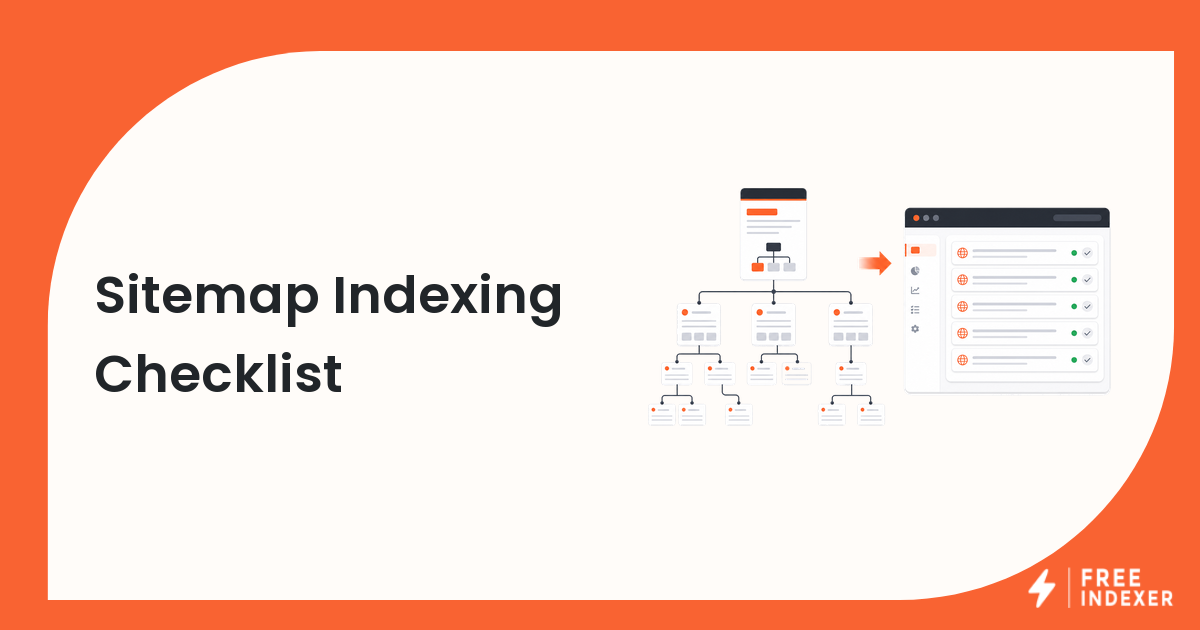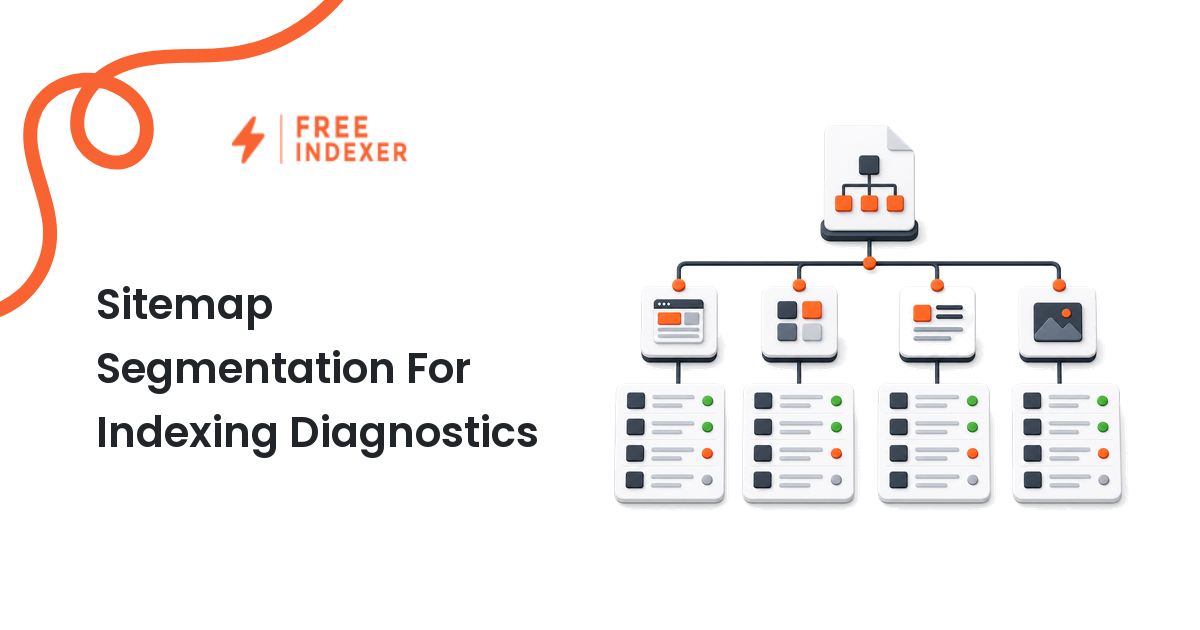
Use sitemap segmentation to diagnose indexing patterns by page type, freshness, template, locale, or campaign without hiding low-quality URLs.
For webmasters, the practical goal is simple: Split sitemaps into meaningful cohorts, then compare indexing evidence by group instead of one giant URL list.
Related FreeIndexer reading:
The Operating Rule
Segment sitemaps so diagnostics match how the site actually works. A single giant sitemap can tell you that something is wrong; segmented sitemaps help reveal whether the problem belongs to a template, locale, product type, content freshness bucket, or campaign cohort.
Technical Signals To Review
- Each sitemap contains canonical, indexable URLs from a clear page group.
- Important page types are separated from archives, filters, variants, and legacy URLs.
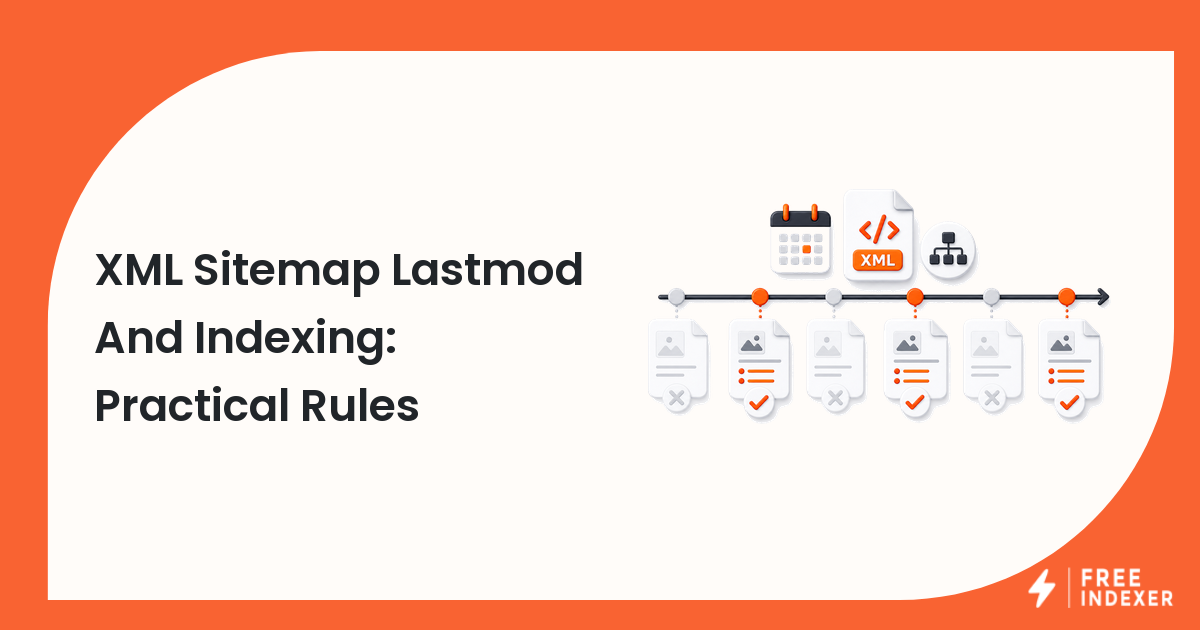
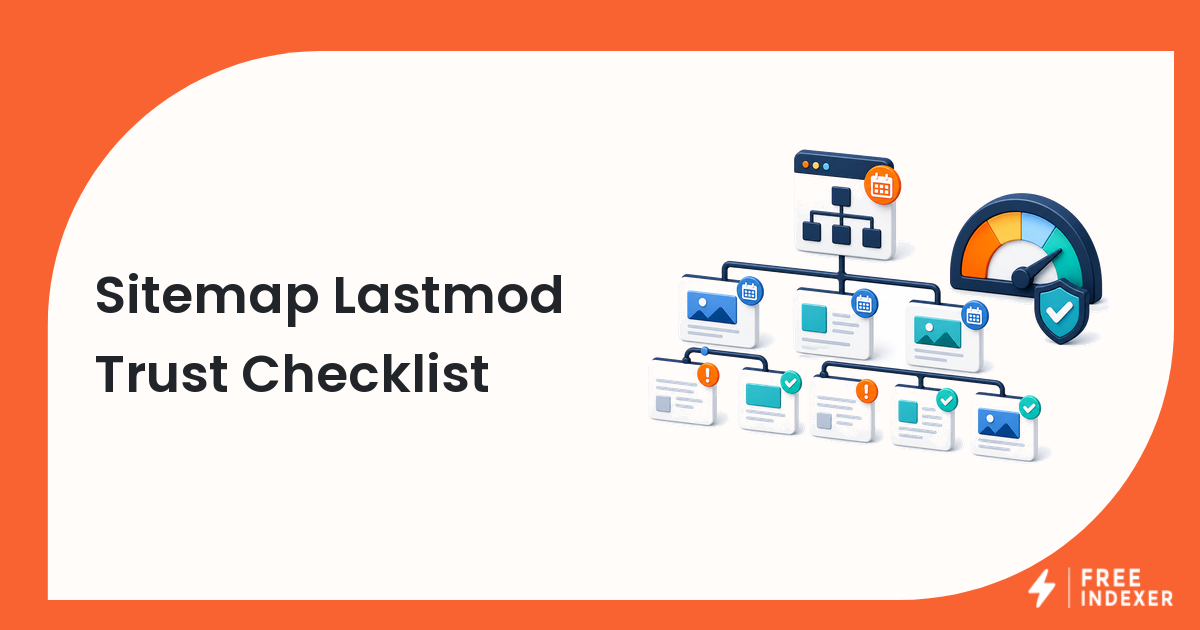
- Lastmod values reflect meaningful updates instead of automated daily churn.
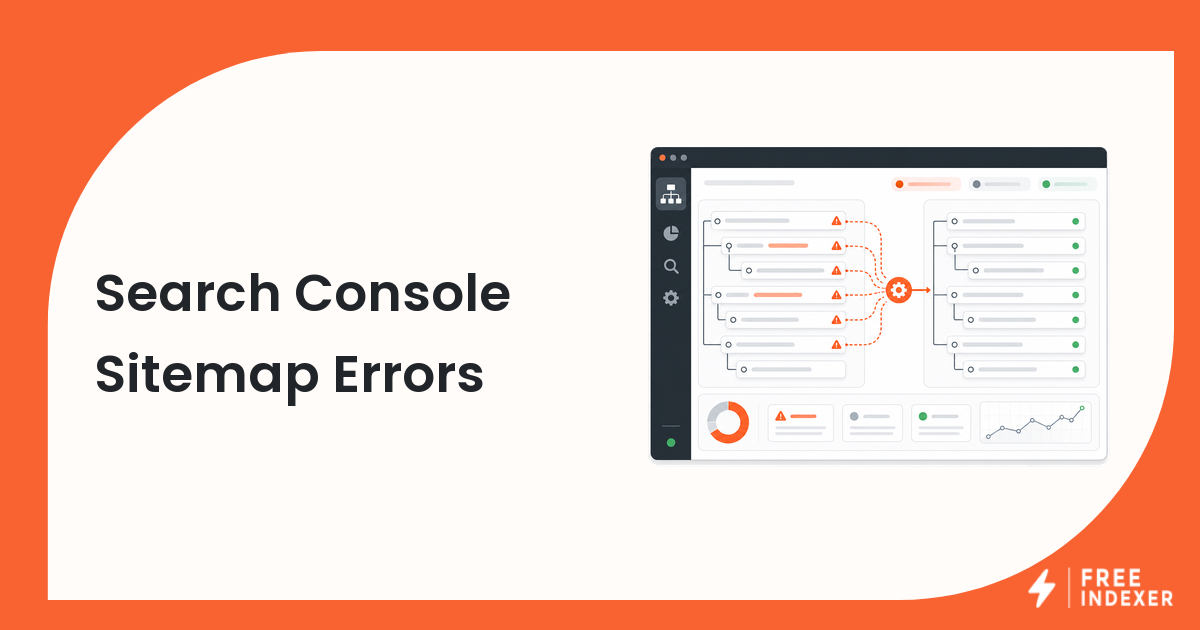
- Search Console and crawl data can be compared by sitemap group.
Implementation And Audit Table
| Step | Control | Evidence | Implementation Decision |
|---|---|---|---|
| 1 | Define cohorts | Page type, locale, template, or campaign purpose | Create sitemap groups that map to real SEO decisions. |
| 2 | Clean each group | Status code, canonical, noindex, and duplicate checks | Remove URLs that should not be indexed. |
| 3 | Check freshness | Lastmod source and update rules | Use lastmod only for meaningful page changes. |
| 4 | Compare indexation | Indexed, discovered, crawled, and excluded counts | Find the cohort with the real problem. |
| 5 | Prioritize fixes | Value and blocker pattern by group | Submit or repair the highest-impact ready groups first. |
Apply the rule consistently at template or system level. A clean implementation should make the intended page state obvious to users, crawlers, sitemaps, internal links, and reporting tools.
Practical Scenario
An ecommerce sitemap index mixes products, categories, filters, blog posts, and retired URLs. Search Console shows poor indexation, but the blended report hides the cause. After segmentation, the team sees that canonical product pages are fine while filtered color URLs are polluting discovery and category pages need stronger internal links.
Failure Modes To Avoid
- Splitting sitemaps randomly by URL count instead of diagnostic meaning.
- Leaving redirected, noindexed, or canonicalized URLs in clean sitemap groups.
- Using automatic lastmod updates that change every URL every day.
- Treating sitemap submission as the only discovery signal.
Where FreeIndexer Fits
FreeIndexer campaigns can mirror sitemap segments: products, refreshed guides, local pages, or priority backlinks. That keeps queue reporting aligned with Search Console evidence.
Implementation Notes For Each Step
1. Define cohorts
Capture page type, locale, template, or campaign purpose before making a conclusion. Create sitemap groups that map to real SEO decisions.
Keep the evidence tied to the exact canonical URL and the date of the check. If the issue affects a shared template or URL pattern, record the pattern as well so the team fixes the system instead of repeating the same manual task.
2. Clean each group
Capture status code, canonical, noindex, and duplicate checks before making a conclusion. Remove URLs that should not be indexed.
Keep the evidence tied to the exact canonical URL and the date of the check. If the issue affects a shared template or URL pattern, record the pattern as well so the team fixes the system instead of repeating the same manual task.
3. Check freshness
Capture lastmod source and update rules before making a conclusion. Use lastmod only for meaningful page changes.
Keep the evidence tied to the exact canonical URL and the date of the check. If the issue affects a shared template or URL pattern, record the pattern as well so the team fixes the system instead of repeating the same manual task.
4. Compare indexation
Capture indexed, discovered, crawled, and excluded counts before making a conclusion. Find the cohort with the real problem.
Keep the evidence tied to the exact canonical URL and the date of the check. If the issue affects a shared template or URL pattern, record the pattern as well so the team fixes the system instead of repeating the same manual task.
5. Prioritize fixes
Capture value and blocker pattern by group before making a conclusion. Submit or repair the highest-impact ready groups first.
Keep the evidence tied to the exact canonical URL and the date of the check. If the issue affects a shared template or URL pattern, record the pattern as well so the team fixes the system instead of repeating the same manual task.
Turn The Findings Into An Action Queue
A diagnostic result is useful only when it changes what the team does next. Move each URL into one of four clear queues:
- Ready: the URL is useful, canonical, public, technically accessible, and ready for submission or normal monitoring.
- Fix: the URL has a correctable technical, content, linking, rendering, or reporting problem with an assigned owner.
- Exclude: the URL is intentionally redirected, noindexed, removed, duplicate, private, or otherwise outside the indexing target set.
- Escalate: the issue affects infrastructure, templates, migrations, security controls, or a large URL cohort and needs engineering or product input.
For this topic, the release rule is: Split sitemaps into meaningful cohorts, then compare indexing evidence by group instead of one giant URL list. Do not leave a URL in a vague pending state. Give it an owner, one next action, and a review date based on the evidence available.
Evidence Log To Keep
| Field | What To Record | Why It Matters |
|---|---|---|
| Canonical URL | The final normalized URL checked by the operator | Prevents variants and redirects from splitting the investigation. |
| Cohort | Page type, template, campaign, locale, or backlink group | Reveals whether the issue is isolated or systemic. |
| Evidence source | Live response, URL Inspection, crawl, log, sitemap, or provider record | Makes the conclusion reproducible. |
| Change made | The exact technical, content, link, or workflow update | Separates action from assumption. |
| Owner and review date | Who is responsible and when the URL will be checked again | Stops the queue from becoming passive reporting. |
Keep submission dates in their own field. A submitted URL has completed an operational step; it has not automatically completed crawling, indexation, ranking, traffic, or conversion milestones. That separation makes the report more accurate and makes failed outcomes easier to diagnose.
Final Action Checklist
- [ ] Define cohorts: Create sitemap groups that map to real SEO decisions.
- [ ] Clean each group: Remove URLs that should not be indexed.
- [ ] Check freshness: Use lastmod only for meaningful page changes.
- [ ] Compare indexation: Find the cohort with the real problem.
- [ ] Prioritize fixes: Submit or repair the highest-impact ready groups first.
- [ ] Confirm the final URL and evidence date in the tracking sheet.
- [ ] Remove excluded or unresolved URLs from the active submission batch.
- [ ] Schedule one follow-up review instead of repeating untracked checks.
Primary Sources
FAQ
How many sitemap groups are enough?
Use as many as you need to make decisions by page type, but avoid creating groups so tiny they add reporting noise.
Should low-value URLs get their own sitemap?
Usually they should be excluded from indexable sitemaps, not isolated and submitted.
How does FreeIndexer use this?
Use the same sitemap cohorts as campaign groups so submission reporting lines up with diagnostics.
Next Step
Split sitemaps into meaningful cohorts, then compare indexing evidence by group instead of one giant URL list.
Keep the final report honest: document what was fixed, what was submitted, what evidence changed, and what still requires time or a separate SEO decision.