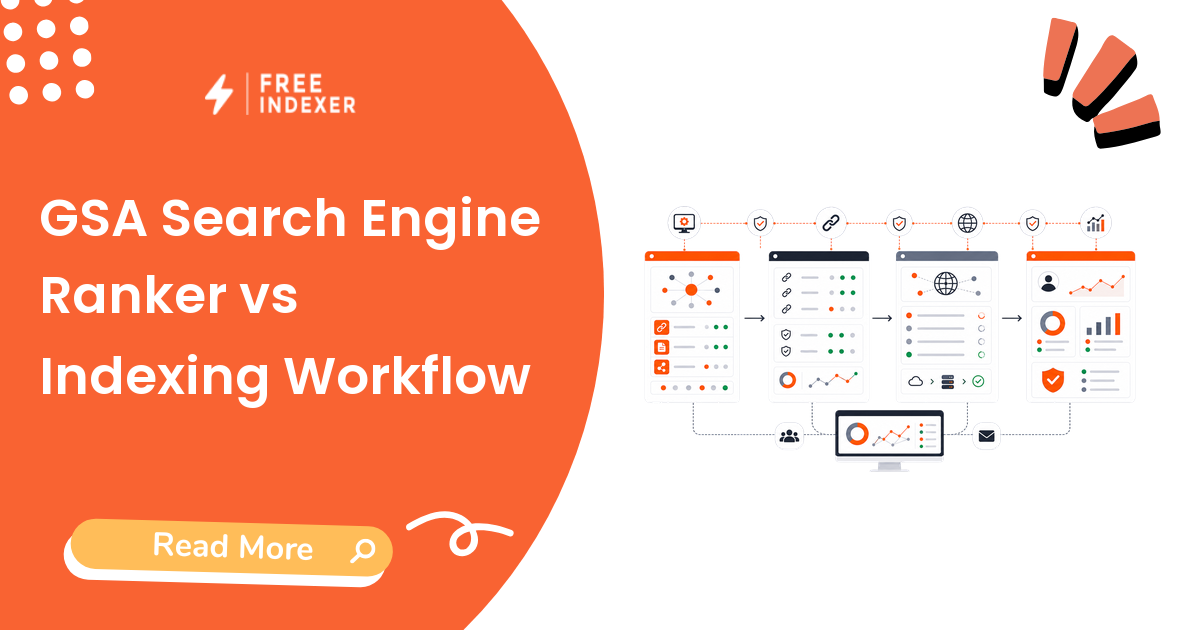
GSA Search Engine Ranker and an indexing workflow do not do the same job. GSA SER is associated with SEO automation and link-building campaign execution. An indexing workflow starts after URLs or backlinks exist and need verification, prioritization, submission, tracking, and reporting.
For the backlink discovery foundation, start with the backlink discovery and indexing guide. This comparison is for SEO operators who want clear workflow separation without risky claims.
The Short Answer
Use GSA SER only inside a controlled SEO campaign process with strict quality, risk, and reporting rules. Use an indexing workflow only for verified URLs or backlinks that deserve discovery follow-up.
Do not treat automation output as an indexing queue. First verify whether the URLs are live, accessible, relevant, and worth tracking.
Role Comparison
| Workflow layer | GSA Search Engine Ranker | Indexing workflow |
|---|---|---|
| Main role | Campaign execution or SEO automation | Discovery follow-up and tracking |
| Input | Campaign settings, target lists, content, rules | Verified URLs, backlinks, and priority lists |
| Output | Created or attempted placements | Submitted, tracked, or monitored URLs |
| Quality risk | High if used without controls | Lower if the input list is qualified |
| Reporting focus | What was attempted or created | What was verified, submitted, and monitored |
| What it cannot promise | Rankings, quality, search acceptance | Certain indexing or ranking |
If you are choosing broader indexing tools, read best Google indexing tools.
Responsible Workflow Separation
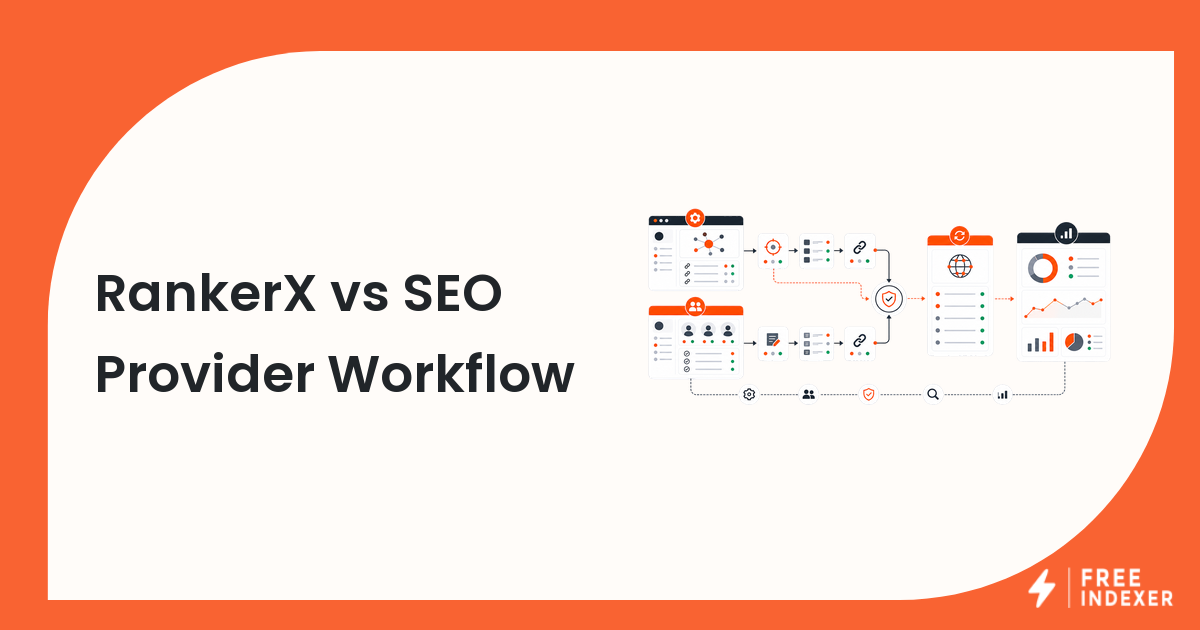
A responsible operator separates the workflow into five stages:
- Campaign planning.
- Campaign execution.
- Link or URL verification.
- Indexing and discovery follow-up.
- Reporting and monitoring.
GSA SER belongs in the execution stage if your team chooses to use it. FreeIndexer belongs in the indexing and discovery follow-up stage after the URL list is verified. Those layers should never be blurred.
Verification Checklist Before Indexing Follow-Up
Before any URL from SEO software enters a discovery queue, check:
- The URL returns a public
200status. - The page is not blocked by login, preview mode, or robots directives.
- The link or page is visible in the rendered HTML.
- The target URL is correct and does not rely on unnecessary redirects.
- The page has enough context to be worth tracking.
- The URL is assigned to a campaign, target page, and priority tier.
- The team can report the action without implying certain indexing or ranking.
For backlink quality review, use backlink quality before indexing.
Decision Tree
| Situation | Next action |
|---|---|
| You only have attempted campaign output | Verify first |
| URLs are broken or inaccessible | Remove or repair |
| URLs are public but low value | Record only if needed |
| URLs are verified and relevant | Add to discovery follow-up |
| Client asks for guarantees | Explain the limits clearly |
Workflow Example
An agency exports 600 URLs from a software-assisted campaign. A quick review shows:
- 180 URLs are not public.
- 90 URLs are redirects or broken.
- 220 URLs are low-value but live.
- 110 URLs are public, relevant, and tied to active campaign targets.
The agency should not submit all 600. The responsible queue is the 110 verified URLs, possibly split into priority tiers. FreeIndexer can support that verified follow-up list with submission and tracking, while the agency reports software execution separately from indexing actions.
Use track backlink discovery for SEO campaigns when building the reporting layer.
Common Mistakes
- Exporting every automation URL directly into an indexing tool.
- Reporting attempted placements as verified backlinks.
- Ignoring quality and relevance because the campaign produced volume.
- Using indexing language to imply ranking outcomes.
- Mixing campaign software, provider work, and discovery follow-up in one report.
Part Of This Series
This article is part of the SEO Software And Automation Tools series.
Recommended path:
- Previous: SEO Software And Automation Tools
- Current: GSA Search Engine Ranker vs Indexing Workflow
- Next: RankerX vs SEO Provider Workflow
Series hub: SEO Software And Automation Tools
Related guides from other workflows:
FAQ
Is GSA Search Engine Ranker an indexing tool?
No. It is associated with SEO automation and campaign execution. Indexing workflows deal with verified URLs or backlinks after they exist.
Should every URL from SEO software be submitted?
No. Verify, filter, and prioritize first. Many URLs may be broken, private, low value, or not worth discovery follow-up.
Can indexing follow-up guarantee that software-created links count?
No. Search engines decide what they crawl, index, and value. A responsible workflow avoids guarantees.
Where does FreeIndexer fit?
FreeIndexer fits after verification, when an operator has a clean list of URLs or backlinks that deserve discovery follow-up.
Next Step
Separate link-building software output from verified indexing follow-up. Clean separation protects your reporting and keeps discovery work focused on URLs worth tracking.