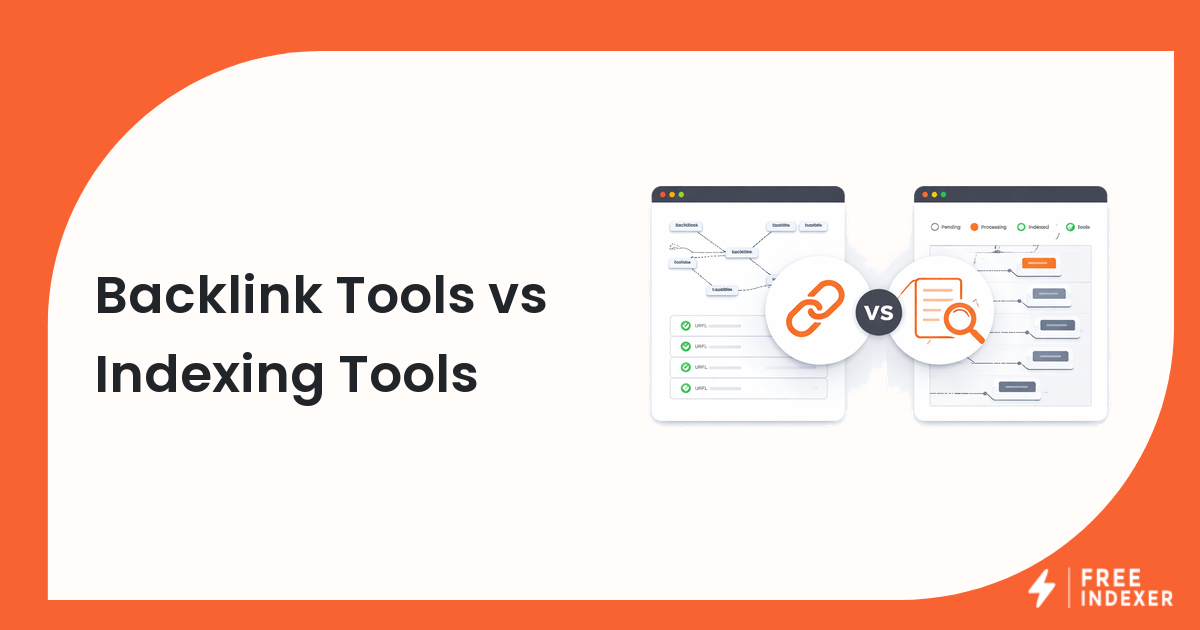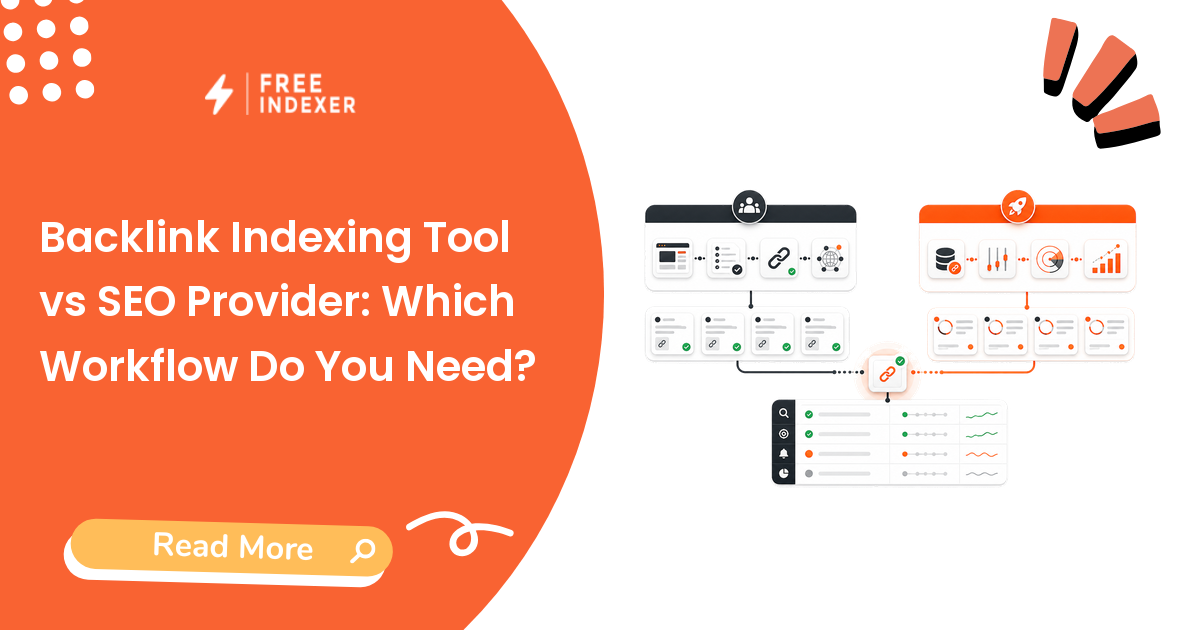
Backlink indexing tools and SEO providers solve different problems. A provider may help with SEO tasks, content, outreach, or link-building operations. An indexing tool helps organize discovery follow-up for URLs or backlinks that already exist and deserve tracking.
For the broader indexing foundation, start with the indexing education hub. This comparison is written for SEO agencies that need clean operating boundaries.
Short Verdict
Use an SEO provider when you need execution: managed SEO, link-building tasks, content support, or campaign delivery. Use a backlink indexing tool when you already have verified backlink URLs and need a repeatable way to prioritize, submit, and track discovery work.
Many agencies use both, but they should not be treated as the same product. Provider delivery is not the same as search discovery follow-up.
Comparison Table
| Factor | Backlink indexing tool | SEO provider |
|---|---|---|
| Main role | Organize URL or backlink discovery follow-up | Execute SEO or link-building tasks |
| Input | Verified URLs, backlinks, and priority lists | Campaign goals, target pages, budgets, briefs |
| Best user | SEO operator or agency operations lead | Agency, site owner, affiliate, or marketing team |
| Output | Submission, tracking, prioritization, workflow records | Delivered tasks, placements, content, or managed work |
| Reporting | What was submitted, tracked, and followed up | What was delivered or completed |
| Limit | Cannot guarantee indexing or rankings | Should not be treated as an indexing control layer |
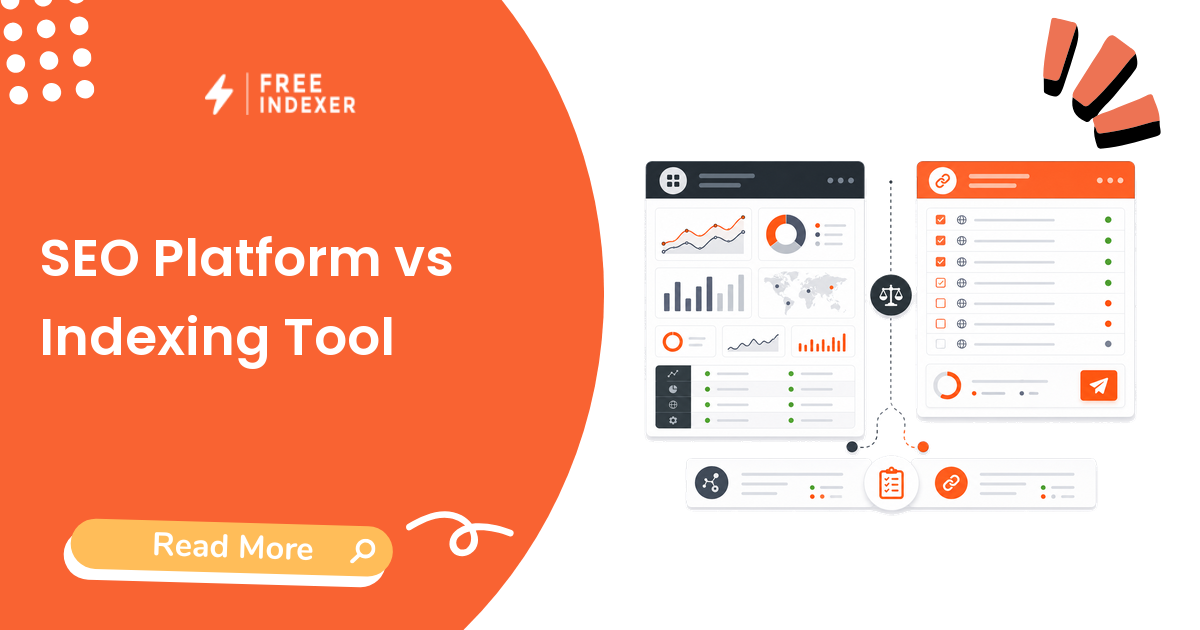
If you are evaluating indexing tools specifically, read best backlink indexer. For broader platform decisions, read SEO platform vs indexing tool.
When To Choose Each Option
Choose a provider when you need someone to do the SEO work. That might include content creation, link prospecting, managed campaigns, technical cleanup, or other services. An SEO provider such as SEOeStore can be part of that execution layer for teams that outsource some SEO or link-building tasks.
Choose an indexing tool when your team already has URLs or backlinks and needs to answer:
- Which links are verified?
- Which URLs are worth follow-up?
- Which client or campaign owns this link?
- Has this URL already been submitted or tracked?
- What should be reported without promising outcomes?
FreeIndexer belongs in the second layer. It helps with URL submission, backlink discovery queues, bulk workflows, and repeatable tracking. It does not replace an SEO provider's campaign execution.
Decision Tree
| Your situation | Recommended workflow |
|---|---|
| You need links, content, or managed SEO work | Start with a provider or internal SEO execution team |
| You have delivered links but no verification process | Build a backlink verification checklist first |
| You have verified backlinks and need follow-up | Use an indexing or discovery workflow |
| You manage many clients | Separate provider delivery, internal QA, and indexing follow-up |
| You need client-safe reporting | Report delivery, verification, submission, and observed outcomes separately |
Workflow Example
An agency buys or manages link-building work for three clients. At the end of the month, the provider sends a delivery sheet. The agency should not paste the whole sheet into an indexing tool immediately.
The stronger workflow is:
- Verify each linking URL is live.
- Confirm the backlink is visible and points to the right target.
- Remove broken, private, wrong-target, or low-value rows.
- Tier the remaining links by campaign importance.
- Use an indexing workflow for the verified priority group.
- Report provider delivery separately from discovery follow-up.
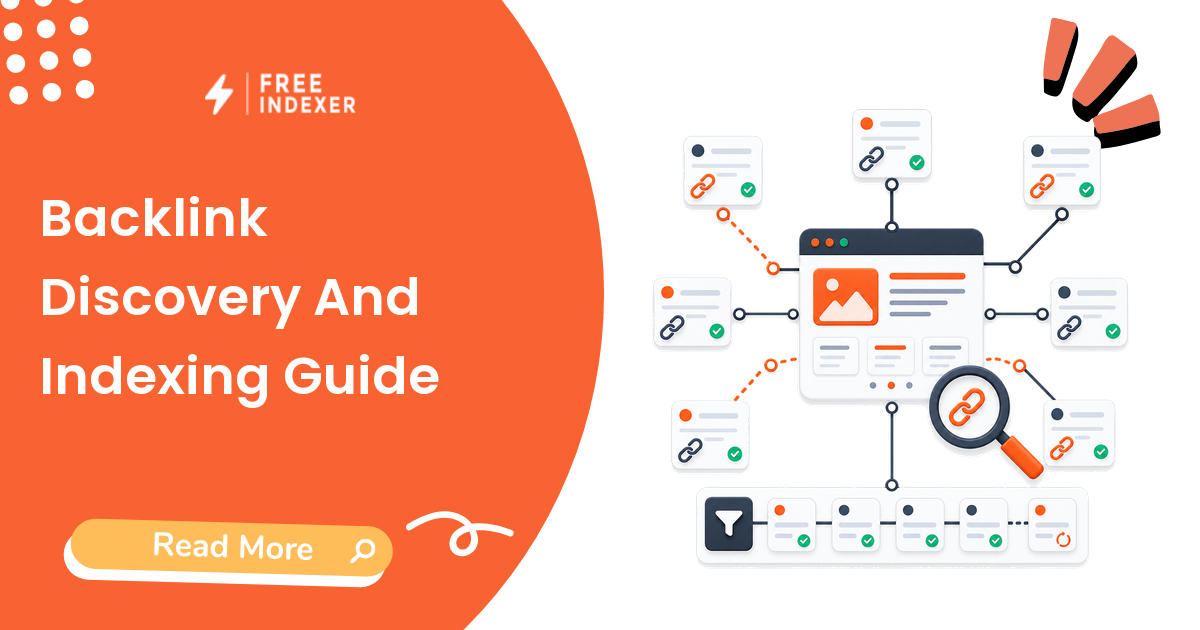
For client-facing reporting, use backlink indexing for client reporting. For the operational background, read the backlink discovery and indexing guide.
Where FreeIndexer Fits
FreeIndexer fits after verification. It is useful when an agency wants to process backlink URLs in batches, track what was submitted, and avoid repeating manual work across client campaigns.
It should not be positioned as a guarantee. A clean report might say:
- provider delivered 40 placements
- agency verified 32 public backlinks
- 18 were prioritized for discovery follow-up
- priority backlink URLs were submitted or tracked
- outcomes will be monitored without guaranteeing indexing or ranking
That separation keeps expectations realistic.
Common Mistakes
- Treating a provider delivery sheet as a verified backlink list.
- Assuming an indexing tool can repair poor link quality.
- Reporting "indexed links" without checking what was actually observed.
- Using the same anchor-heavy language for every provider mention.
- Combining provider costs and indexing workflow costs without explaining their different jobs.
FAQ
Is a backlink indexing tool the same as an SEO provider?
No. An indexing tool supports discovery follow-up for known URLs or backlinks. An SEO provider helps execute SEO work such as managed campaigns, content, or link-building tasks.
Can an SEO provider guarantee rankings?
No responsible workflow should rely on guaranteed ranking claims. Rankings depend on many factors outside a provider's direct control.
Should agencies use both?
They can. Use providers for execution and indexing tools for verified URL or backlink follow-up. Keep the reporting separate.
Where does FreeIndexer fit?
FreeIndexer is the indexing and discovery workflow layer for submitted URLs, backlink URLs, batching, tracking, and prioritization.
Next Step
Use providers for SEO execution and indexing tools for verified discovery follow-up. Clean separation makes the workflow easier to manage and the reporting easier to trust.