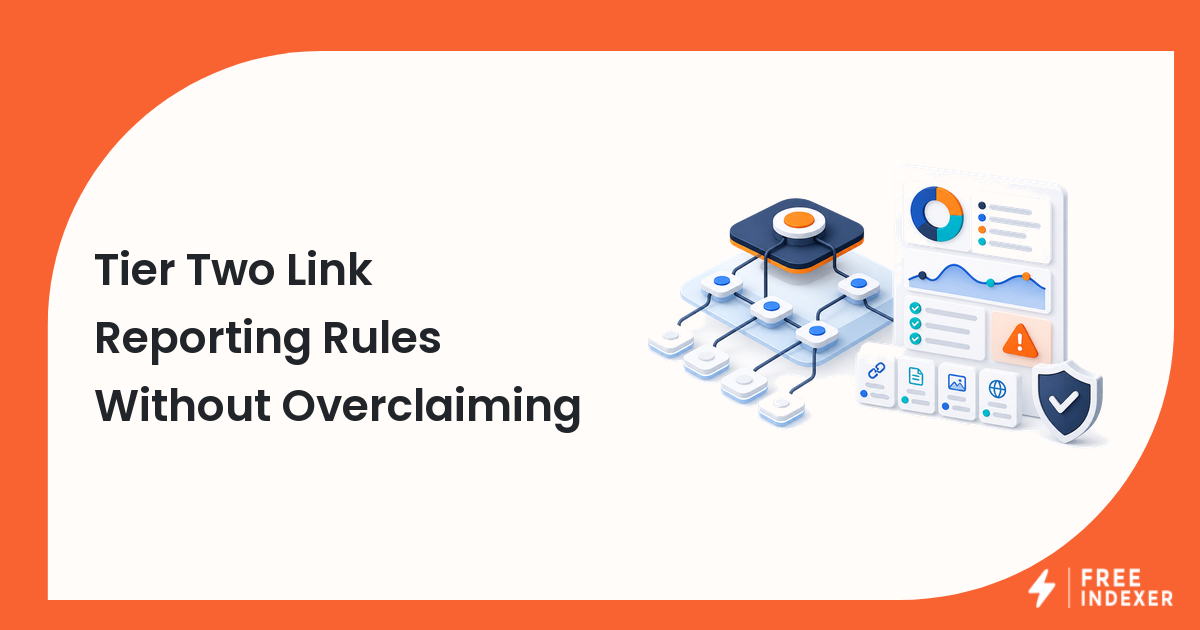
Set tier two link reporting rules that separate verification, submission, discovery evidence, risk notes, and realistic client language.
For seo agencys, the practical goal is simple: Keep tiered link reports evidence-based and conservative so the workflow does not turn into claim inflation.
Related FreeIndexer reading:
Quick Answer
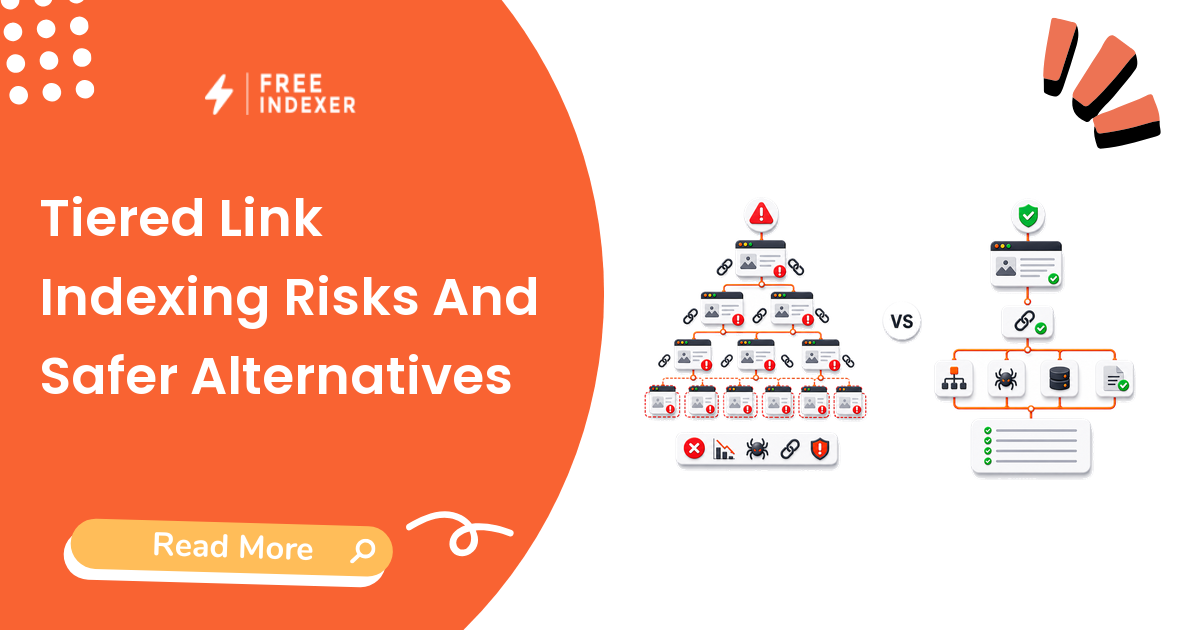
Tier two link work can create reporting pressure because volume looks impressive. Good reporting separates what was verified, what was submitted, what evidence changed, what carries risk, and what cannot be promised.
Signals That Matter
- The report distinguishes linking-page verification from submission and Google-side outcomes.
- Low-quality, irrelevant, or risky link sources are flagged instead of hidden inside volume totals.
- Campaign notes preserve vendor, target, anchor, placement type, and evidence date.
- Client language avoids guarantees, ranking promises, or claims beyond the evidence.
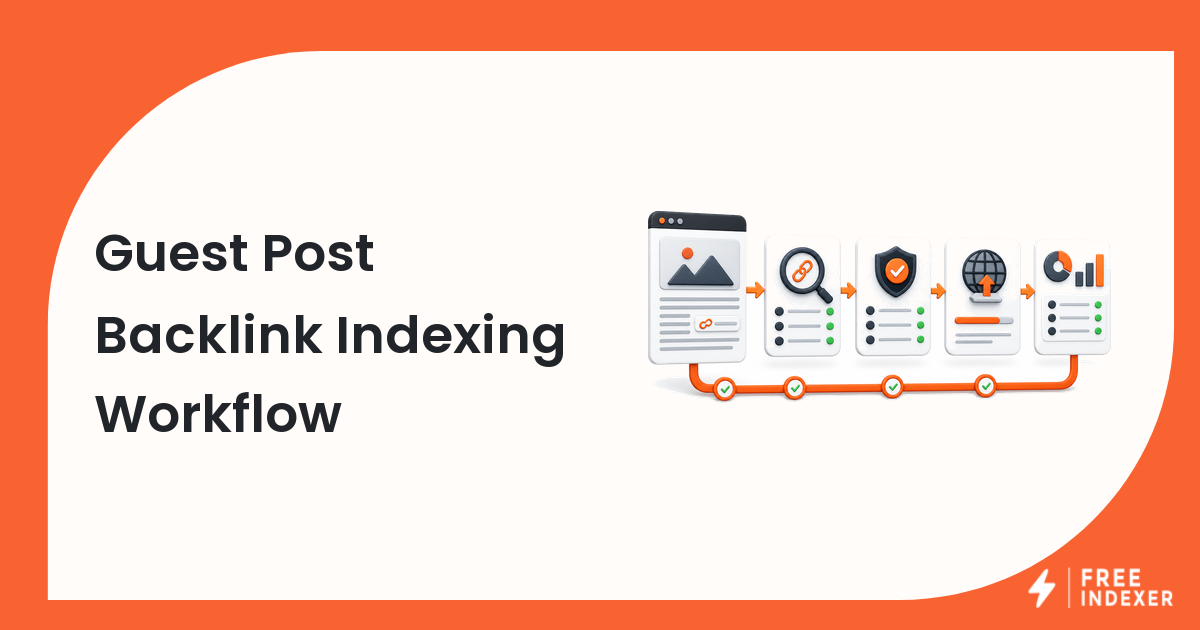
Step-By-Step Workflow
| Step | Check | Evidence To Capture | Next Action |
|---|---|---|---|
| 1 | Define allowed sources | Quality threshold, relevance, and risk criteria | Prevent risky URLs from entering the workflow. |
| 2 | Verify rows | Live URL, target, anchor, access, and context | Do not submit unverified link lists. |
| 3 | Record submission | Tool, date, owner, and campaign | Separate action from outcome. |
| 4 | Track evidence | Crawl, index, link report, or discovery notes | Report what changed and what is still unknown. |
| 5 | Review language | Client claims, caveats, and exclusions | Keep reporting accurate and defensible. |
A useful tracker keeps the evidence and the conclusion separate. Record what the URL returned, what the tool reported, what changed, who owns the next action, and when the page should be reviewed again.
Worked Example
A link team delivers 1,500 tier two URLs. The reporting rules exclude low-quality sources, tag unverified placements, and report only 640 verified submissions with risk notes. The client gets a cleaner, less inflated update.
The point of the example is not the exact numbers. It is the sequence: verify the real page, classify the issue, make one defensible change, and preserve enough evidence to evaluate the result later.
Common Mistakes
- Reporting raw tier-two volume as if it equals indexed links.
- Hiding risky source types in aggregate numbers.
- Submitting unverified rows from provider exports.
- Promising ranking movement from tiered link activity.
Where FreeIndexer Fits
Use FreeIndexer as the submission record for verified tier-two URLs. Keep quality judgment and reporting caveats in the surrounding workflow.
Implementation Notes For Each Step
1. Define allowed sources
Capture quality threshold, relevance, and risk criteria before making a conclusion. Prevent risky URLs from entering the workflow.
Keep the evidence tied to the exact canonical URL and the date of the check. If the issue affects a shared template or URL pattern, record the pattern as well so the team fixes the system instead of repeating the same manual task.
2. Verify rows
Capture live url, target, anchor, access, and context before making a conclusion. Do not submit unverified link lists.
Keep the evidence tied to the exact canonical URL and the date of the check. If the issue affects a shared template or URL pattern, record the pattern as well so the team fixes the system instead of repeating the same manual task.
3. Record submission
Capture tool, date, owner, and campaign before making a conclusion. Separate action from outcome.
Keep the evidence tied to the exact canonical URL and the date of the check. If the issue affects a shared template or URL pattern, record the pattern as well so the team fixes the system instead of repeating the same manual task.
4. Track evidence
Capture crawl, index, link report, or discovery notes before making a conclusion. Report what changed and what is still unknown.
Keep the evidence tied to the exact canonical URL and the date of the check. If the issue affects a shared template or URL pattern, record the pattern as well so the team fixes the system instead of repeating the same manual task.
5. Review language
Capture client claims, caveats, and exclusions before making a conclusion. Keep reporting accurate and defensible.
Keep the evidence tied to the exact canonical URL and the date of the check. If the issue affects a shared template or URL pattern, record the pattern as well so the team fixes the system instead of repeating the same manual task.
Turn The Findings Into An Action Queue
A diagnostic result is useful only when it changes what the team does next. Move each URL into one of four clear queues:
- Ready: the URL is useful, canonical, public, technically accessible, and ready for submission or normal monitoring.
- Fix: the URL has a correctable technical, content, linking, rendering, or reporting problem with an assigned owner.
- Exclude: the URL is intentionally redirected, noindexed, removed, duplicate, private, or otherwise outside the indexing target set.
- Escalate: the issue affects infrastructure, templates, migrations, security controls, or a large URL cohort and needs engineering or product input.
For this topic, the release rule is: Keep tiered link reports evidence-based and conservative so the workflow does not turn into claim inflation. Do not leave a URL in a vague pending state. Give it an owner, one next action, and a review date based on the evidence available.
Evidence Log To Keep
| Field | What To Record | Why It Matters |
|---|---|---|
| Canonical URL | The final normalized URL checked by the operator | Prevents variants and redirects from splitting the investigation. |
| Cohort | Page type, template, campaign, locale, or backlink group | Reveals whether the issue is isolated or systemic. |
| Evidence source | Live response, URL Inspection, crawl, log, sitemap, or provider record | Makes the conclusion reproducible. |
| Change made | The exact technical, content, link, or workflow update | Separates action from assumption. |
| Owner and review date | Who is responsible and when the URL will be checked again | Stops the queue from becoming passive reporting. |
Keep submission dates in their own field. A submitted URL has completed an operational step; it has not automatically completed crawling, indexation, ranking, traffic, or conversion milestones. That separation makes the report more accurate and makes failed outcomes easier to diagnose.
Final Action Checklist
- [ ] Define allowed sources: Prevent risky URLs from entering the workflow.
- [ ] Verify rows: Do not submit unverified link lists.
- [ ] Record submission: Separate action from outcome.
- [ ] Track evidence: Report what changed and what is still unknown.
- [ ] Review language: Keep reporting accurate and defensible.
- [ ] Confirm the final URL and evidence date in the tracking sheet.
- [ ] Remove excluded or unresolved URLs from the active submission batch.
- [ ] Schedule one follow-up review instead of repeating untracked checks.
Primary Sources
FAQ
Should tier two links be in client reports?
Only with careful context, evidence fields, and realistic language.
Can FreeIndexer verify link quality?
No. Operators should verify quality and access before adding URLs to FreeIndexer.
What language is safest?
Report verified actions and observed evidence, not promises of indexing, rankings, or traffic.
Next Step
Keep tiered link reports evidence-based and conservative so the workflow does not turn into claim inflation.
Keep the final report honest: document what was fixed, what was submitted, what evidence changed, and what still requires time or a separate SEO decision.